Seven signs your water heater is about to fail
A water heater almost never dies without warning. It just gives the warning somewhere nobody looks.
September 22, 2026 · 4 min read
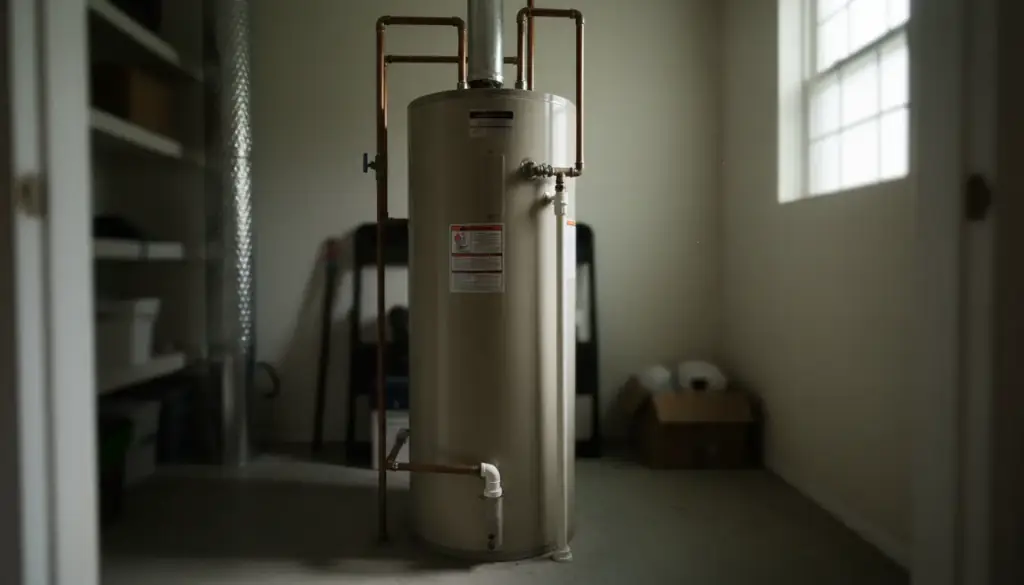
Most people meet their water heater twice: the day it is installed and the day it floods the basement. In between it sits in a utility room doing its job, and the warnings it gives are quiet ones. The good news is that a tank almost always tells you it is failing weeks or months before it actually does. Here is what to listen and look for.
1. The hot water runs out sooner than it used to
This is the most common first sign and the easiest one to talk yourself out of. If a shower that used to run fifteen minutes now goes cold at eight, the usable capacity of the tank has dropped. Usually that is sediment: minerals settle out of the water and build a layer on the bottom of the tank, taking up space that used to hold hot water and insulating the burner from the water it is meant to heat. Nothing has broken yet, but the tank is working harder for less.
2. Popping, rumbling or crackling from the tank
That is the same sediment. Water trapped underneath the layer boils and forces its way up through it, which is what you are hearing. On a gas tank it can sound like distant popcorn. It is not dangerous on its own, but it is a direct measure of how much sediment is in there, and sediment is what eventually cooks a hole through the bottom of a steel tank.
3. Rusty or metallic hot water
Run the cold tap, then the hot. If only the hot side is discoloured or tastes metallic, the problem is almost certainly inside the tank rather than in the supply. Steel tanks are glass lined and protected by a sacrificial anode rod, a length of more reactive metal that corrodes instead of the tank walls. When the anode is used up, the tank itself starts going. Discoloured hot water often means that changeover has already happened.
4. Any water on the floor
Treat this as urgent. A little water near the base might be condensation on a humid day, or a fitting that needs a quarter turn, or the temperature and pressure relief valve doing exactly what it is designed to do. It might also be the tank itself, and a steel tank that has started to weep does not stop. One of our customers put it plainly after his was replaced: the tank was leaking, he called, and it was swapped out in a short period of time. That is the outcome you want, and it depends on calling while it is still a weep.
5. The relief valve keeps discharging
The temperature and pressure relief valve is a safety device, and a valve that lifts repeatedly is reporting something, not misbehaving. It can be genuine overpressure, a thermostat problem, or a failed expansion tank. This is not a part to cap, plug or ignore. If yours is discharging, that is a call.
6. It is older than you think
Check the label. Most manufacturers encode the build date in the serial number, and an installer's sticker will often carry the fit date directly. Our standard warranty on a residential water heater is six years, regular or tankless, and eight year warranty tanks are available if you would rather buy the longer cover up front. Those numbers are a fair guide to how long the industry expects a tank to be trouble free, not a guarantee of the day it will stop.
7. The bills moved and nothing else did
If your household routine has not changed and your energy use has crept up, a sediment insulated burner running longer to reach the same temperature is a reasonable suspect. It is rarely the first sign anyone notices, but it is often the one that confirms the others.
What to do about it
- Water on the floor, or a relief valve that keeps discharging: call the same day.
- Rusty hot water, or popping that has got noticeably louder: get it looked at now rather than at the next inconvenient moment.
- Shorter hot showers on an older tank: worth planning a replacement while you can still choose the timing.
- Know where your shutoff is before you need it, both the cold feed to the tank and the main.
When you do call, you will speak to Kelly in our office, and we return all calls and emails within two hours. Estimates are free, with no service charge deducted off an inflated estimate, and nobody will turn up to sell you something you do not need. If a standard tank is the right answer for your house, your usage and your venting, that is what we will tell you, even though a tankless unit is the bigger sale.
Keith Petersen started this business in 1980 and his son Ryan runs it now. Between them they have replaced a lot of water heaters in the Fox Valley, and almost all of the bad stories start with someone deciding the small puddle could wait a week.
Keith Petersen Plumbing Inc, (920) 687-9272
Call (920) 687-9272More articles
Hard water: what a softener actually does, and what it does not
Softeners are widely sold and widely misunderstood. Here is the honest version of what the equipment in your utility closet is doing.
What to check before you call a plumber
We would rather you solved a five minute problem yourself than paid us to. Here is how to tell which kind you have.